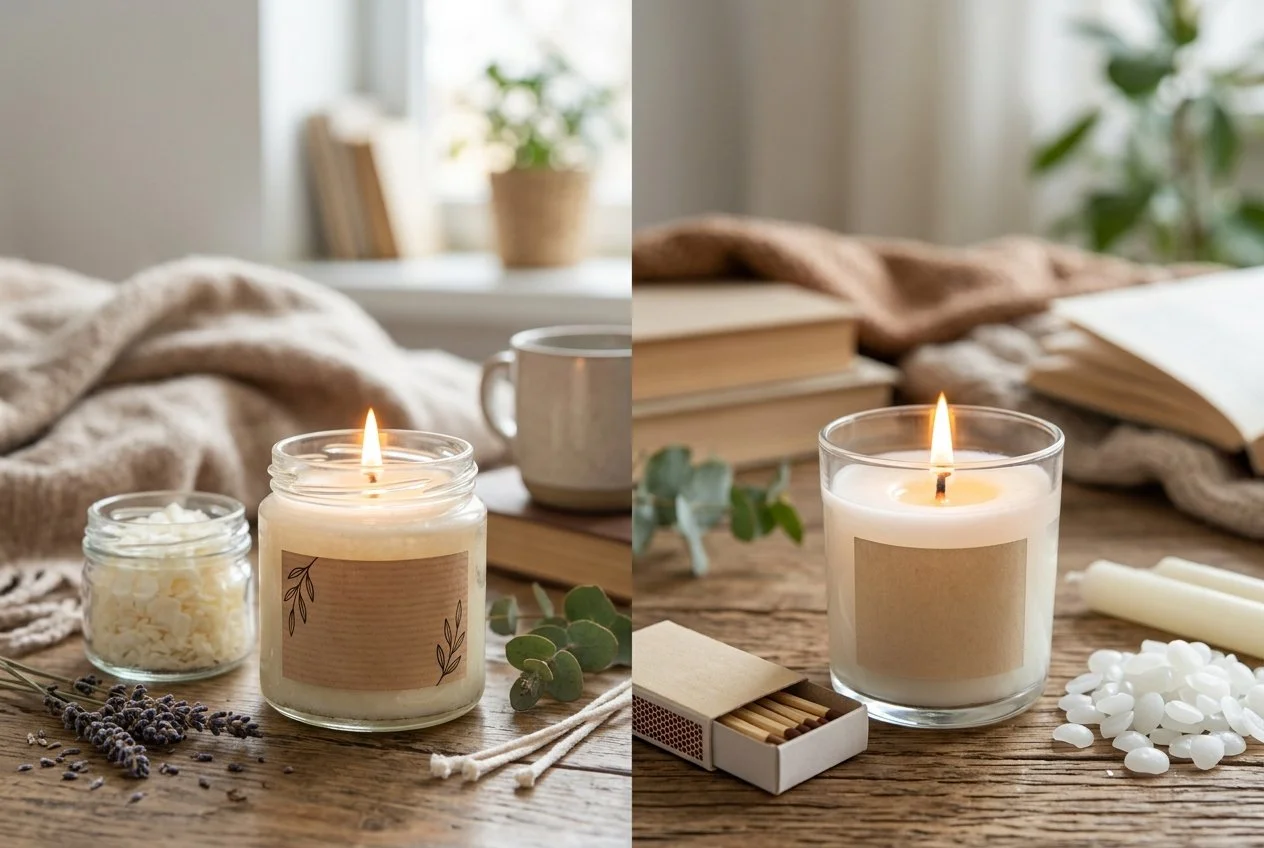
Few choices shape the atmosphere of a home quite like the candle sitting on the mantle. The soft flicker, the warmth of the flame, and the fragrance drifting through a room all depend on what that candle is made of. The debate between soy and paraffin candles has grown louder as consumers become more conscious of health, sustainability, and overall value. If you have ever stood in a candle shop wondering whether the price difference between a soy and paraffin option is actually worth it, this guide breaks down what you need to know.
Understanding the Origins
Soy wax is derived from soybean oil, a renewable crop grown extensively across the American Midwest. The oil undergoes hydrogenation to raise its melting point so it solidifies at room temperature, resulting in a creamy, opaque wax that holds fragrance and burns with a relatively clean flame. Because soybeans are an agricultural product, soy wax is biodegradable and sourced from a resource that can be replanted each season.
Paraffin wax is a byproduct of petroleum refining. When crude oil is distilled, a waxy residue known as slack wax remains. This is further refined to produce the translucent wax used in most commercial candles. Paraffin commands a significant share of the global candle market thanks to its low cost and consistent performance, but its petroleum origins make it a non-renewable resource that carries a higher environmental footprint from production to burn.
Burn Quality and Longevity
Soy wax burns at a lower temperature than paraffin, which means a slower, longer burn. A properly made soy candle can outlast a comparable paraffin candle by 30 to 50 percent. For a cocktail-inspired candle in an 8-ounce vessel, that difference translates to roughly 10 to 15 additional hours of burn time, which is meaningful when you are paying a premium for a hand-poured product.
The cooler burn also reduces the risk of soot — the dark residue that can accumulate on glass vessels, walls, and ceilings from a heavily burning paraffin candle. Soy candles produce minimal soot when the wick is properly trimmed, keeping your vessel clean and your air cleaner. Paraffin candles, particularly those with oversized wicks or high fragrance loads, are more prone to mushrooming wicks and the black carbon deposits that follow.
One practical consideration: soy wax is softer than paraffin and more sensitive to temperature fluctuations. A soy candle stored in a hot car or left in direct sunlight may show surface imperfections like frosting or sinkholes. These do not affect burn performance, but they are worth knowing about if presentation matters to you.
Fragrance Performance
Paraffin has traditionally held an edge in raw scent throw — the distance a candle's fragrance travels through a room. Its higher burning temperature releases fragrance oils more aggressively, which is why many mass-market candles use paraffin blends to achieve that immediate, room-filling impact when you first light them.
However, modern soy wax formulations have closed this gap significantly. The key is in the fragrance load and the blend ratio. Soy wax can hold a fragrance load of up to 10 to 12 percent by weight, and when paired with quality phthalate-free oils, it produces a scent throw that is more nuanced and sustained than the blast-then-fade behavior of many paraffin candles.
At Bottle to Flame, every soy candle is formulated to maximize both cold throw — the scent you smell before the candle is lit — and hot throw, which develops as the wax pool expands. The result is a fragrance experience that builds gradually and holds its character from the first burn to the last.
Health and Environmental Considerations
Soy wax burns cleaner. Studies have found that paraffin candles can release trace amounts of volatile organic compounds including toluene and benzene when burned, particularly in poorly ventilated spaces or when wicks are allowed to burn too long. While the concentrations involved in typical candle use are generally considered low, the concern is real enough that many health-conscious consumers have shifted away from paraffin entirely.
Soy wax does not carry these petroleum-derived concerns. For anyone who burns candles daily — in a home office, during an evening wind-down, or as part of an at-home happy hour ritual — the cumulative air quality difference between soy and paraffin is worth considering. This is especially true in smaller rooms with limited ventilation.
From an environmental standpoint, soy is the clear winner. It is plant-derived, biodegradable, and supports agricultural communities. Spills clean up with soap and water rather than harsh solvents. The carbon footprint of soy wax production is meaningfully lower than that of petroleum-derived paraffin, and the vessels that hold soy candles can be refilled and reused rather than discarded.
Cost Comparison
Paraffin wax costs significantly less than soy wax to produce, which is why budget candles almost universally use it. A paraffin candle will typically cost less at point of purchase, but when you factor in burn time, the math often favors soy. A soy candle that burns 50 percent longer than its paraffin equivalent at a 20 percent higher price point is the better value per hour of burn time.
There is also the question of what you are paying for beyond the wax. Hand-poured soy candles from small-batch makers like Bottle to Flame carry a higher price because they involve more labor, higher-quality fragrance oils, and thoughtfully designed vessels that are built to last. That cost structure reflects the actual value of the product rather than the false economy of cheap wax and synthetic scent.
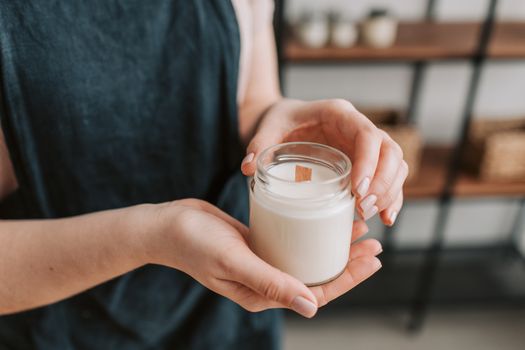
Photo by Vlada Karpovich on Pexels
Why Soy Is the Right Choice for Cocktail-Inspired Candles
For candles designed to replicate the layered complexity of a well-made drink, wax choice is particularly important. A cocktail-inspired fragrance is built on top, mid, and base notes that unfold at different rates as the candle burns. Paraffin's aggressive heat release can flatten that progression, burning through the lighter top notes too quickly and leaving the heavier base notes to dominate prematurely.
Soy wax's slower, cooler burn allows each layer of the fragrance to develop at the pace the candle maker intended. When you light The Old Fashioned, the cherry and orange peel open first, then the clove bitters bloom into the room, and finally the bourbon and leather settle in. That arc is only possible because soy wax gives the fragrance time to tell its story. A paraffin version of the same formula would rush the experience and lose the nuance.
The same principle applies to The Celebratory Brunch, where lavender and champagne notes need room to breathe before the pear blossom base emerges. Soy wax is the right canvas for that kind of fragrance architecture.
Tips for Getting the Best Burn from a Soy Candle
Regardless of which wax type you choose, burn technique matters. For soy candles specifically, the following practices will maximize your experience. On the first burn, allow the candle to burn until the entire surface of wax has melted to the edges of the vessel. This establishes the melt pool memory and prevents tunneling on future burns. For an 8-ounce candle like those from Bottle to Flame, this typically takes two to three hours.
Trim the wick to one quarter inch before every burn. A long wick produces a larger, hotter flame that burns through wax too quickly and can cause soot. A properly trimmed wick maintains a steady, even flame that works with the wax rather than against it. Never burn a soy candle for more than four hours at a stretch, and always allow the wax to solidify completely between burns to preserve the fragrance load.
Frequently Asked Questions
Is soy wax really cleaner than paraffin?
Yes, in meaningful ways. Soy wax is plant-derived and produces minimal soot when burned correctly. Paraffin, as a petroleum byproduct, can release trace volatile organic compounds during combustion. For everyday candle use, soy is the cleaner choice for both indoor air quality and environmental impact.
Does soy wax hold fragrance as well as paraffin?
Modern soy wax formulations hold fragrance very well, up to 10 to 12 percent by weight. The scent throw differs from paraffin — soy tends to release fragrance more gradually and with more nuance, while paraffin delivers a more immediate, aggressive throw. For layered fragrance profiles like cocktail-inspired candles, soy's measured release is actually an advantage.
Why does my soy candle look frosted or uneven on top?
Frosting is a natural characteristic of soy wax caused by the polymorphic nature of vegetable oils. It does not indicate a defect or affect burn performance. It is simply soy wax returning to its natural crystalline state. If surface appearance matters, store your candles away from direct sunlight and temperature swings.
Are soy candles worth the higher price?
When you factor in longer burn time, cleaner performance, and the quality of fragrance oils typically paired with soy wax, the answer is yes for most buyers. A soy candle that burns 40 percent longer than a cheaper paraffin alternative at a 20 percent price premium is the better value per hour, before even accounting for air quality or sustainability.
Our Verdict
At Bottle to Flame, we chose soy wax from day one. Cleaner burn, longer life, better for the air in your home, and the right canvas for the kind of layered cocktail-inspired fragrances we pour. Every candle in our collection uses 100% natural soy wax (GW 464) and phthalate-free fragrance oils. That is the standard we hold ourselves to, and we think you will feel the difference from the first light. Browse the collection and find the pour that fits your space.