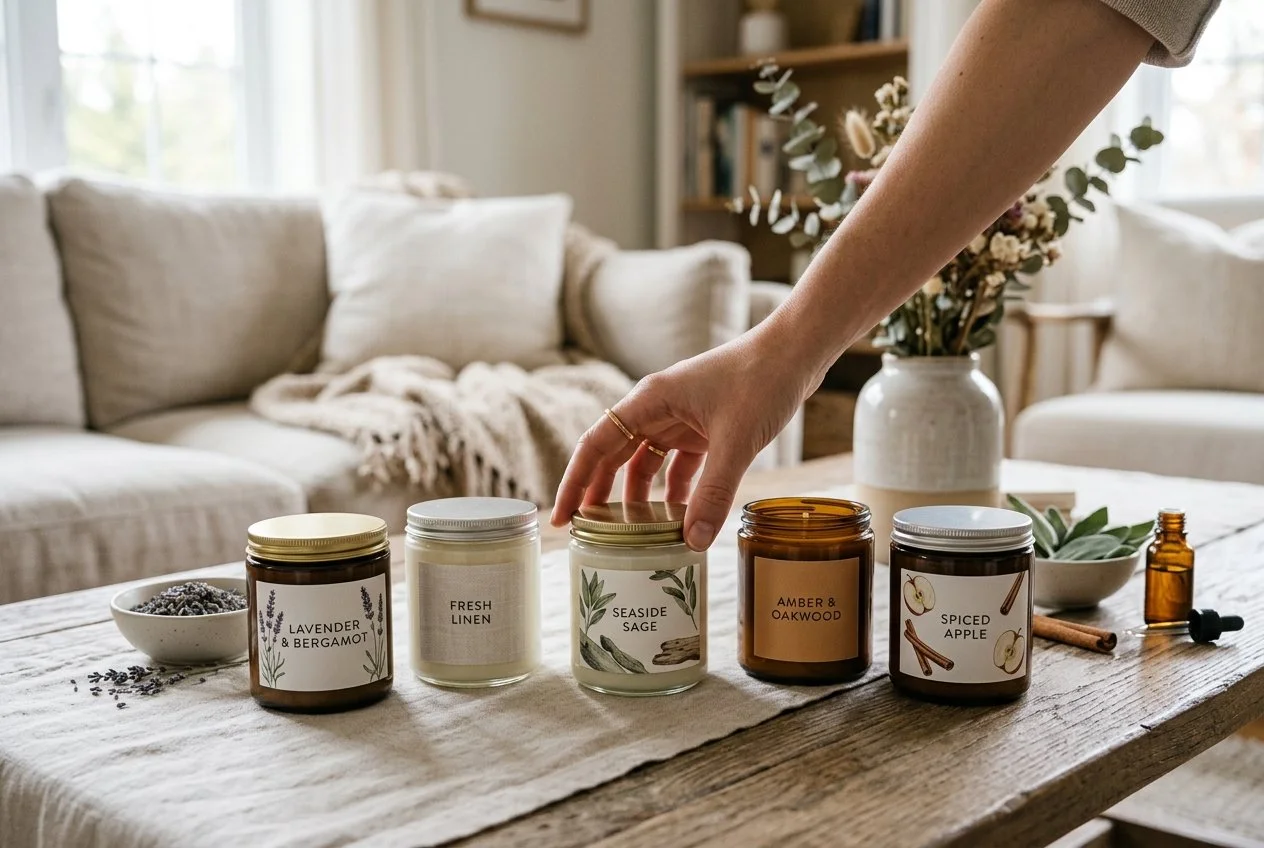
A single candle can transform the entire atmosphere of a room, shifting it from sterile and forgettable to warm, inviting, or invigorating within minutes. Yet standing in a store surrounded by dozens of options, each promising a different sensory experience, can feel genuinely overwhelming. Most people either grab whatever smells pleasant in the moment or default to the same scent they have always bought, never quite finding the one that feels exactly right for their home.
Choosing the right candle scent is less about luck and more about understanding your spaces, your preferences, and the subtle science behind fragrance. These five steps will help you make intentional, satisfying choices rather than expensive guesses. Whether you are new to candles or building out a collection, this framework will serve you well.
Step 1: Identify the Purpose and Mood of Your Space
Every room in your home serves a different function, and the scent you introduce should complement that purpose rather than fight against it. A candle burning in a home office demands a completely different fragrance profile than one flickering beside a bathtub at the end of a long day. Before you think about notes or brands, think about the room.
Living rooms and entertaining spaces benefit from scents that are welcoming without being distracting. Warm, complex profiles — aged wood, a hint of smoke, or a cocktail-inspired blend — work well here because they create ambiance without calling too much attention to themselves. A candle like The Old Fashioned from Bottle to Flame, with its bourbon, leather, and clove bitters profile, is well suited to a living room or home bar where you want guests to feel the atmosphere rather than analyze it.
Bedrooms call for something quieter. Lavender, white musk, and soft floral profiles help signal to the brain that it is time to wind down. Avoid anything too sharp or stimulating — citrus and spice, however pleasant, are better reserved for spaces where you want energy rather than rest. Bathrooms can handle brighter, cleaner scents, including fresh herbs, sea minerals, or a light citrus that feels refreshing rather than heavy.
Home offices are interesting. Many people find that light, herbaceous, or mildly energizing scents — green tea, eucalyptus, bergamot — improve focus without becoming distracting. Avoid anything too sweet or too heavy during working hours. Save the bourbon candle for after five.
Step 2: Consider the Room Size
Scent throw — how far a fragrance travels and how strongly it fills a space — depends on both the candle's formulation and the room's volume. A candle that feels perfect in a small reading nook may disappear entirely in an open-plan living room. Getting this wrong in the opposite direction is also possible: a large, heavily fragranced candle in a small powder room can become suffocating within minutes of lighting.
As a rough guide, an 8-ounce candle is well suited to rooms up to about 200 to 250 square feet. For larger spaces, you either need a larger vessel, a stronger fragrance load, or the strategic placement of two smaller candles at different points in the room. Bottle to Flame's 8.5-ounce glass tumblers are sized for bedrooms, offices, and medium living spaces. For entertaining in larger rooms, the Day & Night approach — burning complementary candles in different zones — gives you more control over the scent environment.
Ventilation matters too. A room with open windows or strong air conditioning will dissipate fragrance faster than a still, enclosed space. If you are burning a candle to set the mood for guests, light it 20 to 30 minutes before they arrive and close interior doors to let the scent build. Once the room is at the right fragrance level, crack a window slightly to maintain it without letting it become too concentrated.
Photo by Yan Krukau on Pexels
Step 3: Think in Layers, Not Single Notes
The best candle fragrances evolve as they burn, just like a well-made cocktail. A single-note candle — pure lavender, for instance, or straight vanilla — delivers exactly what it promises, but it rarely holds your attention across an entire evening. The most memorable fragrance experiences come from candles built with a deliberate structure: top notes that greet you when you first light the wick, mid notes that bloom as the wax pool expands, and base notes that anchor the whole composition and linger in the room long after the flame is out.
When reading candle descriptions, look for this kind of layered language. A candle described only as "bourbon" is a single-note product. A candle described as opening with cherry and orange peel, developing into clove bitters and muddled sugar, and settling into aged bourbon and leather is telling you about a structured fragrance experience. That structure is the difference between a candle that smells pleasant and one that actually evokes something.
At Bottle to Flame, this layered approach — what we call the Mixologist's Approach — is built into every pour. The Celebratory Brunch, for example, opens with lavender, blooms into sparkling champagne and citrus, and finishes on a base of pear blossom. The Old Fashioned follows the same logic in a darker register. Both candles are designed to be interesting from first light to last burn. If you want to understand what layered fragrance feels like in practice, either of those is a good place to start.
Step 4: Match the Season
Fragrance is deeply tied to environmental context, and the same candle that feels perfect in January can feel stifling by July. Rotating your candles with the seasons is one of the simplest ways to keep your home feeling fresh, considered, and alive to the time of year.
Spring and summer call for lighter, brighter profiles. Citrus top notes — grapefruit, lemon, lime — feel energizing and clean. Fresh herbs like basil, mint, and thyme evoke a garden after rain. Coastal mineral notes and white floral profiles work beautifully in warmer months when windows are open and air circulates freely. The Blanc from Bottle to Flame, with its grapefruit, fresh herbs, and tomato vine profile, is built for exactly this kind of warm-weather lighting.
Fall and winter favor depth and warmth. Amber, aged wood, spiced fruit, vanilla, and leather profiles feel appropriate against the backdrop of shorter days and cooler air. This is the season for The Old Fashioned — the bourbon and clove notes settle into a room the way a good fire does, creating comfort without effort. Mulled spice, dark rum, and earthy cedarwood profiles all belong to this half of the year.
A practical approach is to keep two or three candles on hand at any given time: one for the current season, one that bridges seasons, and one for specific occasions like entertaining or unwinding after work. Rotating between them keeps your home's fragrance identity dynamic rather than static.
Step 5: Trust Your Personal Memory
Fragrance is the sense most directly linked to memory and emotion. More than sight or sound, a smell can transport you instantly — to a place, a person, a moment that mattered. This is not a quirk; it is neuroscience. The olfactory bulb, which processes scent, connects directly to the amygdala and hippocampus, the parts of the brain that handle emotion and memory. No other sense has that direct a pathway.
This means that the best candle for you is not necessarily the one with the most sophisticated fragrance profile or the best reviews. It is the one that activates something personal. If the smell of aged bourbon takes you back to your grandfather's study or a great trip you once took, a bourbon candle will deliver something no other fragrance can. If the scent of champagne and citrus recalls a celebration you never want to forget, that is your candle.
Start with what you know you love. If you love the smell of a good whiskey, explore the darker, spirit-forward profiles. If you love summer evenings on a patio, look for citrus, herbs, and clean mineral notes. Use your own memory as a compass, and then explore outward from there. The Bottle to Flame collection is built on exactly this principle — every candle is designed to evoke a specific moment or ritual, because that emotional specificity is what turns a scented object into something that actually means something.
Photo by Sena on Pexels
A Note on Testing Before You Commit
If you are exploring a new brand or fragrance family, burn a candle for at least two full sessions before deciding whether it is right for you. Many people judge a candle on the cold throw alone — the scent you smell before lighting — but the hot throw, which develops once the wax pool has fully formed, is often quite different. A candle that smells faint or sharp from the jar may open beautifully once it has been burning for an hour.
Give it time. The first burn is the candle introducing itself. The second and third burns are when the relationship actually begins.
Frequently Asked Questions
How many candles should I have in my home at once?
There is no rule, but two to four candles across different rooms and fragrance profiles is a practical starting point. Having one for the living room, one for the bedroom, and one for occasional entertaining gives you flexibility without overwhelming your home with competing scents.
Can I burn two different candles in the same room?
You can, but be careful about fragrance clashes. Candles with complementary notes — for example, a citrus and a light floral — can coexist. Contrasting profiles like a smoky bourbon and a sweet vanilla can create confusion rather than complexity. If you want to layer scents intentionally, look for candles designed as pairs, like the Day & Night Cocktail Candle Set, where the scents are formulated to work together.
How do I know if a candle scent will work in my space before buying?
Read the notes carefully and think about what those notes smell like in real life. Juniper and lime will smell clean and botanical. Leather and oak will smell rich and grounding. If a candle's listed notes correspond to something you already enjoy in other contexts — a favorite spirit, a place you love, a scent you associate with a good memory — it is likely to work. For first purchases from a new brand, starting with a well-known profile like an Old Fashioned or a champagne-inspired scent reduces the risk of a mismatch.
Is it better to have one signature scent or rotate?
Both approaches work. A single signature scent can become part of your home's identity — guests will associate that fragrance with your space. Rotating scents keeps the experience fresh and lets you match the mood of your home to the season or occasion. If you are just starting out, rotating is a good way to discover which profiles resonate most before committing to a signature.
The right candle is out there — it just takes a little intention to find it. Start with these five steps, trust your instincts, and do not be afraid to explore. Browse the Bottle to Flame collection to find a pour that fits your space, your season, and your memory.